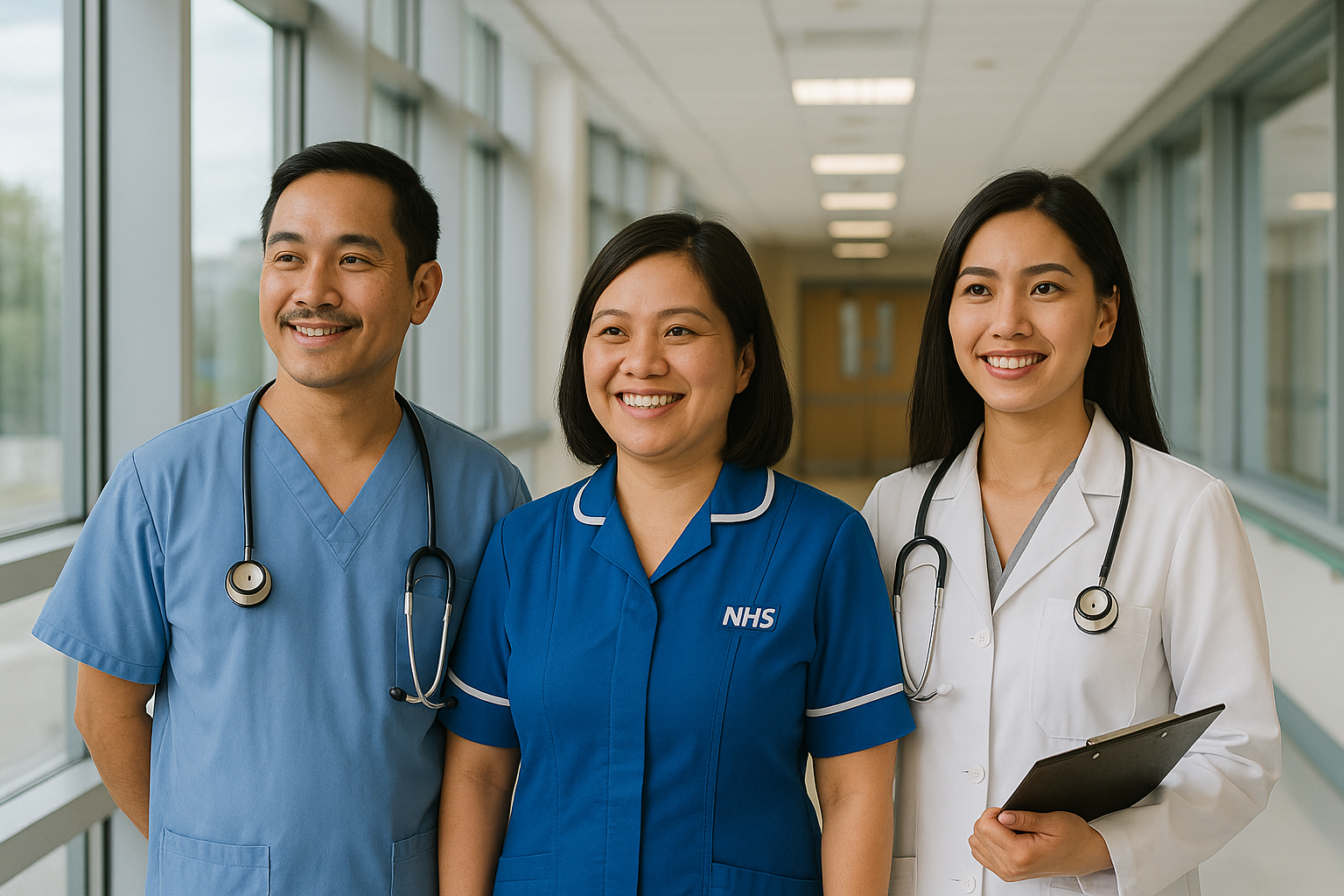
For decades, Filipino healthcare professionals have been at the heart of the United Kingdom’s National Health Service (NHS). From nurses and midwives to doctors and carers, their dedication and compassion have made them indispensable. Yet behind every smiling uniform lies a story of sacrifice, resilience, and hope—echoing the wider narrative of the Filipino diaspora in the UK.
A Legacy of Service
The Filipino presence in the UK health sector dates back to the 1970s, when the NHS began recruiting nurses from the Philippines to address staff shortages. Drawn by the promise of stable work and better living conditions, thousands left their homeland to serve abroad.
Today, more than 40,000 Filipino healthcare workers are employed across the UK, according to NHS Digital—making them one of the largest overseas groups in the NHS. Many are now British citizens, mentors, or managers, passing down values of malasakit (deep care) and bayanihan (community spirit) to younger generations.
Stories of Strength and Sacrifice
Behind the statistics are human stories that capture the Filipino spirit.
-
Maria, a nurse from Iloilo, recalls arriving in London in 2003: “I worked night shifts and studied during the day. I missed home every day, but I knew I was helping both my patients and my family back in the Philippines.”
-
Dr. Santos, a general practitioner in Leeds, says his motivation came from seeing his parents—both nurses—serve during the COVID-19 pandemic: “They were heroes in quiet ways. That inspired me to train in the UK and give back.”
For many, their work extends beyond the hospital. Filipino healthcare workers often serve as pillars of their local Filipino communities—organizing church events, supporting newcomers, and sending remittances that sustain families and small businesses back home.
Challenges on Foreign Soil
Despite their contributions, Filipino professionals still face hurdles.
-
Cultural Adjustment: Many struggle with homesickness and cultural isolation, especially during their first years.
-
Recognition and Career Progression: Some face delays in getting their overseas qualifications recognized, limiting advancement.
-
Discrimination and Racism: Though often subtle, these experiences can erode morale and confidence.
-
Workload and Burnout: NHS staffing shortages and long hours take a heavy toll—issues made worse during the pandemic, when Filipino nurses were disproportionately affected by COVID-19 deaths.
The combination of professional stress and emotional distance from family often places Filipino workers in a delicate balance between pride and exhaustion.
Community Resilience and Support
Filipino associations, church groups, and online communities have become lifelines for many NHS staff. Groups like the Philippine Nurses Association UK (PNA-UK) and Filipino UK Nurses Community (FNUK) provide mentoring, peer support, and advocacy for fair treatment and professional growth.
Meanwhile, the Philippine Embassy in London regularly hosts outreach programs to help with documentation, welfare support, and community recognition. These efforts strengthen the sense of belonging among Filipinos who now consider the UK their second home.
The Future: From Workforce to Leadership
As more Filipino healthcare workers establish roots in the UK, the next step is empowerment. Increasing representation in management, policy, and education is key to shaping a more inclusive NHS.
Encouraging Filipinos to pursue advanced training, leadership roles, and academic research can amplify their voice within the system they’ve long supported. With a growing second generation of British-Filipinos entering medicine and allied health fields, the legacy of Filipino service is evolving from workforce contribution to leadership influence.
The Filipino diaspora in the UK health sector embodies compassion, endurance, and quiet heroism. They have cared for countless British lives, often while being far from their own families. As the NHS faces ongoing challenges, the Filipino community remains a steadfast partner in healing and hope.
Their story is one of migration turned into mission—a living testament that wherever they go, Filipinos bring not just skills, but heart.
Disclaimer: This article is for general information only. Statistics, workforce data, and healthcare policies may change over time, so readers should refer to official NHS and UK Government sources for the latest information.