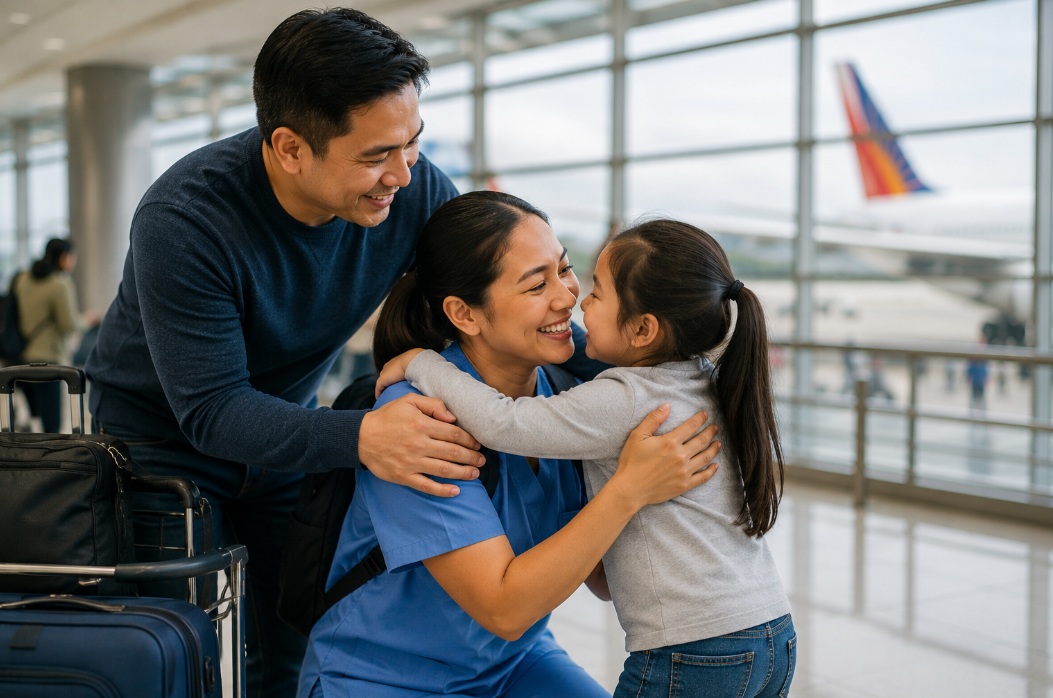
For many Filipinos, moving to the United Kingdom is not simply about finding employment. It is about building a better future for their families.
Over the past few years, thousands of Filipino care workers have moved to Britain to work in care homes, residential facilities, and community care services. Alongside career opportunities, many hoped to reunite with their spouses and children through the UK’s dependant visa system.
However, changes to immigration rules introduced in recent years have created confusion and concern within migrant communities.
One question now dominates conversations in Filipino Facebook groups, care worker forums, and community organisations:
Can Filipino care workers still bring their families to Britain in 2026?
The answer is yes in some circumstances, but not for everyone.
Understanding the difference between existing workers and new applicants is crucial.
What Changed?
On 11 March 2024, the UK government introduced restrictions preventing newly arriving care workers and senior care workers from bringing partners and children as dependants under the Health and Care Worker route.
The change was part of a wider package of immigration reforms aimed at reducing net migration levels.
As a result, many people assumed that no care worker could bring family members to the UK anymore.
That is not entirely accurate.
The Important Exception: Transitional Arrangements
The good news for many Filipinos already working in the UK is that transitional arrangements remain in place.
According to current government guidance, care workers and senior care workers who have been continuously employed in the UK on a Health and Care Worker Visa or Skilled Worker Visa since before 11 March 2024 may continue to have eligible dependants join them or remain with them in the UK.
The UK government has also confirmed that existing Skilled Worker visa holders covered by transitional arrangements may continue to extend visas, change employers where eligible, and bring dependants under the applicable rules.
This distinction is extremely important.
Who May Still Be Able to Bring Dependants?
Under current guidance, dependants may still be possible where:
- The care worker has been continuously employed in the UK on a qualifying visa since before 11 March 2024.
- Existing dependant family members already hold dependant status.
- Certain child-related exceptions apply.
- Transitional protections apply to the worker’s immigration route.
For many Filipino families who entered the UK before the rule changes, opportunities for family reunification may still exist.
Who Is Most Affected?
The biggest impact falls on new overseas applicants entering the care worker route after the rule changes.
Individuals applying under the newer restrictions generally cannot bring spouses or children as dependants through the care worker route in the same way that earlier applicants could.
This has significantly changed migration planning for many families considering the UK as a destination.
Why So Many Families Are Confused
Part of the confusion comes from the fact that different groups are subject to different rules.
A Filipino care worker who arrived in 2023 may have different rights and options compared with someone applying for the same role in 2026.
This has led to misunderstandings online, where advice that is correct for one person may be completely wrong for another.
Recent reports have even highlighted cases where families legally residing in the UK under earlier arrangements received unexpected communications that created anxiety and uncertainty, despite holding valid immigration status.
Who Counts as a Dependant?
Under UK immigration rules, dependants can include:
- Husband or wife
- Civil partner
- Unmarried partner meeting qualifying requirements
- Children under 18
- In some circumstances, dependent children over 18 who already hold dependant status.
Each applicant must still satisfy relationship and eligibility requirements.
Financial Requirements
Family members joining a worker as dependants may need to demonstrate maintenance funds unless an exemption applies.
Current guidance states that applicants generally need:
- £285 for a partner
- £315 for one child
- £200 for each additional child
Some applicants may be exempt if they have already lived in the UK for a qualifying period or if their sponsor certifies maintenance support.
What Existing Filipino Care Workers Should Do
If you are already working legally in the UK, there is no reason to panic.
Instead:
Keep Your Immigration Records Updated
Ensure passports, visas, and UKVI records remain accurate.
Retain Copies of Important Documents
Keep copies of sponsorship records, visa decisions, employment contracts, and previous immigration correspondence.
Follow Official Guidance
Immigration rules change regularly. Always check official government guidance before making important decisions.
Seek Professional Advice
For complex family situations, a regulated immigration adviser or solicitor can provide advice tailored to your circumstances.
Is Britain Still a Good Option for Filipino Families?
Despite the changes, thousands of Filipino families continue to build successful lives in the UK.
Filipinos remain highly valued in healthcare, social care, engineering, education, business, and other sectors.
Many who entered the UK before the recent reforms continue to benefit from transitional arrangements that provide a pathway towards long-term residence and family stability.
The key is understanding exactly which rules apply to your situation.
Final Thoughts
The belief that all Filipino care workers have lost the ability to bring family members to Britain is a myth.
While restrictions introduced in 2024 significantly changed the rules for new applicants, many workers who entered the system before those changes continue to benefit from transitional protections.
For this reason, every Filipino care worker should understand their individual immigration position rather than relying on rumours circulating online.
Immigration rules can be complicated, but accurate information remains your best protection.
If you are unsure about your status, your eligibility to sponsor family members, or future immigration plans, seek guidance from official government sources or qualified immigration professionals.
For many Filipino families, opportunities still exist—but understanding the rules has never been more important.