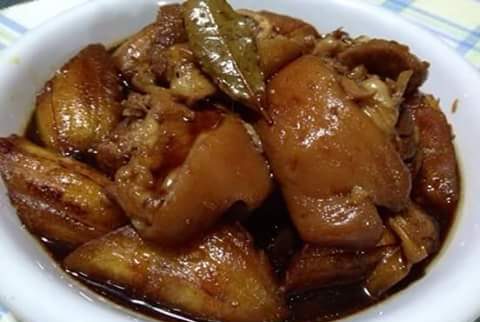
Filipino cooking blends the cuisines of China and Spain. Pancit molo, for example, is much like chow mein, and lumpia are smaller versions of Chinese egg rolls. Leche flan, a sweet custard dish, is typically Spanish, as is rellenong manok, chicken stuffed with hard-boiled eggs, pork, sausages and spices.
In one method of preparation, adobo, pork, chicken or fish is marinated in a mixture of soy sauce, vinegar and garlic. Seafood such as shrimp, crab, lobster, lapu-Iapu and tuna, is cooked simply and quickly to preserve the natural flavours. Numerous recipes call for the use of one of the dozens of varieties of bananas; for example, kare-kare combines peanut sauce, fermented shrimp paste, banana heart and oxtail. Likewise, the ubiquitous coconut enriches many dishes.
Vegetables, many familiar to Americans and Europeans, include camote, a delicately flavoured sweet potato. The staple of the Filipino meal is rice or, in some areas, corn, which may be eaten at all three meals. Dessert often consists of succulent tropical fruit–sweet pineapples, mangoes, papayas, mangosteens and jackfruit. The cooling, semiliquid halo-halo combines chopped fruit, shaved ice, milk, ice cream, and sometimes sweet beans.
Filipino meals are not served in courses; rather, the whole meal, at room temperature, is laid out all at once. Turo-turo counters, where food is displayed cafeteria style, feature a complete assortment of native dishes. The diner can ask names and prices and choose individual items at his discretion. Restaurants in cosmopolitan Manila serve Spanish, Chinese, French, Italian, Japanese, Indonesian and Mexican food as well as Filipino specialties.
Alcoholic Beverages
A domestic beer, San Miguel, is known internationally for its fine, natural flavour. Widely distributed throughout the islands, its alcoholic content varies depending on where it is sold. Cerveza Negra is a darker version of San Miguel.
Native alcoholic beverages include tuba (fermented coconut juice); basi (fermented sugar cane); kasuy (derived from cashew nuts); and the very potent lambanog (distilled palm liquor). First-class restaurants keep cellars amply stocked with Philippine, European and American wines.
Disclaimer: This article is for general information only. Recipes, ingredients, and regional variations may differ across the Philippines and are presented for cultural and educational purposes.